
The Limits of SMART and the Role of MLS
Introduction: The Structural Challenge of Goal Execution
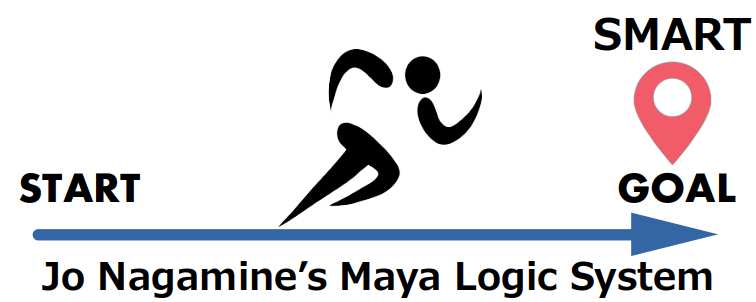
The SMART framework (Specific, Measurable, Achievable, Relevant, Time-bound) is the global standard for defining goals. However, while SMART excels at definition, it struggles with execution sustainability and the objective adjustment cycle necessary for long-term success.
The Nagamine MLS (Maya Logic System) introduces the objective time structure of the Tzolkin cycles and the Energy Filter to fundamentally resolve this structural weakness. MLS ensures that goal achievement is driven not by fleeting motivation, but by a reproducible structure of autonomous action and objective adjustment.
1. The Two Structural Limits of SMART Goals
Even when goals are defined using the SMART criteria, professionals often face decision paralysis in the execution phase:
Limit 1: Decision Divergence and Action Stalemate
- When a long-term goal is broken down into many specific tasks of similar priority, the question, “What should I do, when, and in what order today?” creates decision divergence. Action choices become subjective and reliant on personal motivation, leading to stagnation.
Limit 2: Lack of an Objective Adjustment Cycle
- SMART defines the ultimate Time-bound deadline, but it lacks a clear, objective cycle for mid-term review and flexible adjustment. This means course correction often happens too late or is based on subjective assessment, causing the goal to drift.
2. Synergy with MLS: Structuring Autonomy and Execution
MLS integrates with SMART by providing the missing structural elements: an objective mechanism for daily choice and a non-subjective rhythm for adjustment.
A. Trecena (13-Day Cycle): Guaranteeing Objective Adjustment
MLS uses the Trecena (13-day cycle) as the objective, energy-based milestone for reviewing the SMART goal.
| Tzolkin Cycle | Integrated SMART Element | Synergistic Effect |
| Trecena (13 Days) | Time-bound & Achievable | Provides an objective adjustment rhythm. Every 13 days, progress is reviewed against the Trecena’s energy theme, ensuring flexible course correction and structurally preventing goal drift. |
B. Daily Energy: The “Action Filter” for Structured Choice
MLS uses the Daily Energy as a non-subjective Action Filter to resolve daily decision paralysis.
- The Filter’s Role: The Daily Energy acts as an objective framework, narrowing down the infinite choice of tasks to a focused selection. It asks, “Which type of task is best supported by today’s energy?”
- Structuring Choice: This shifts action away from subjective mood and towards logical selection. The client actively chooses to prioritize a task that aligns with the day’s filter (e.g., prioritizing planning tasks on a ‘Planning’ energy day), thus promoting autonomous execution and reducing decision fatigue.
Conclusion: Reproducibility of Goal Achievement
The MLS framework complements SMART by transforming its defined goals into a structurally executable system. By guaranteeing an objective adjustment cycle (Trecena) and providing a filter for daily autonomous choice (Daily Energy), MLS ensures that goal achievement is not a matter of luck or sporadic motivation, but a reproducible outcome driven by structural consistency.