- Nagamine-style Team Analysis
- 1. Organizational Orientation Method (Space / Directional Dynamics)
- 2. Organizational Identity Analysis (Being / Identity Analysis)
- 3. Organizational Cyclic Calendar (Time / Strategic Cyclicity)
- Supplement: Team Member Changes and “Rebooting Identity”
- Nagamine Method Team Analysis: System Output Flow (Logic Implementation)
Nagamine-style Team Analysis
Deciphering the Organization as a “Living Entity” through a Tri-Dimensional Structure
Nagamine Team Analysis is a methodology for understanding and managing teams as structured entities, rather than as collections of individual personalities.
It is not a form of fortune-telling, personality typing, or compatibility analysis.
This approach is built upon the Nagamine Mayan Logic System, a modern reconstruction of selected principles derived from the ancient Mayan calendar, in which concepts such as luck, divination, and prediction have been deliberately removed in order to create a practical analytical framework applicable to contemporary organizations and teams.
Conventional team analysis methods often rely on retrospective evaluation based on outcomes and performance indicators.
While statistical and data-driven approaches are effective in identifying correlations between inputs and outputs, they struggle to capture internal structural imbalances, role distribution, and the dynamic influence of team composition.
Similarly, approaches based on individual analysis face inherent limitations: individual behavior and decision-making are significantly altered when embedded within a team context.
Attempting to analyze every interpersonal relationship and aggregate them into a coherent understanding of the team is, both theoretically and operationally, impractical.
The core principle of Nagamine Team Analysis lies in viewing the team itself as a single “person” through a triadic structural framework.
Rather than providing definitive answers or prescriptions, analytical results are used as lenses through which situations can be interpreted.
By conceptualizing the team as a unified entity, leaders can operate at a macro level, avoiding excessive focus on isolated variables while gaining clarity on overall direction, balance, and tendencies.
This methodology consists of several interrelated analytical approaches.
The Organizational Directional Cycle Method applies the concept of directional attributes derived from ancient Mayan thought to recognize the distribution of resources and tasks within a team. By viewing work as a cyclical flow—such as ideation, execution, and outcomes—it becomes possible to identify areas of stagnation, overload, or imbalance in a structural manner.
The Organizational Directional Persona Method treats the team as possessing a distinct persona, enabling leaders to visualize collective strengths, challenges, and risks. This perspective supports consistent internal and external communication, and allows leaders to absorb external pressure through the “team persona” rather than confronting it directly at an individual level.
Additionally, the Organizational Cyclical Calendar Method extends the concept of treating the team as a person by aligning daily analytical data with cyclical temporal patterns. These daily analyses do not provide answers, but instead function as questions that prompt reflection and action. This temporal perspective also supports planning, milestone setting, and adaptive recalculation when team membership changes.
Nagamine Team Analysis is particularly suited to situations in which team-based work places a heavy cognitive and strategic burden on leadership, and where the causes of stagnation are unclear despite the presence of capable individuals.
This methodology does not offer ready-made solutions or decisions. Instead, it provides structured information that supports perception, judgment, and action.
For this reason, it is designed for leaders and organizations that seek to engage proactively and strategically with their teams, rather than delegating responsibility for decision-making or relying on externally imposed answers.
The Core Philosophy: The Organization is a “Living Entity,” Not a “Collection of Individuals”
In conventional management theory, a team is often viewed merely as a “sum of individual skills.” However, we frequently see organizations that fail to progress or experience stagnation despite having highly talented members.
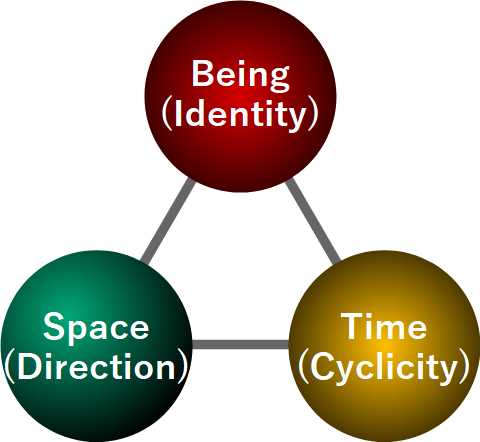
Nagamine-style Team Analysis is built upon the Nagamine-style Maya Logic System (MLS). It analyzes an organization from three distinct perspectives: Space, Being, and Time. These are not competing methods; rather, they are different lenses that, when combined, create a three-dimensional view of the organization’s true form.
We do not rely on subjective data like personality surveys. Instead, we use the “unchanging constants” of birth dates to integrate these three approaches and design a “seamless circulation” for the organization.
The Three Perspectives of Analysis
Nagamine-style Team Analysis is executed by combining the following three independent methodologies:
| Perspective | Methodology | Strategic Focus |
| Space | Organizational Orientation Method | Structural View: Identifies resource distribution across the four cardinal directions (East, North, West, South). Visualizes energy clogs and operational bottlenecks to provide precise structural solutions. |
| Being | Organizational Identity Analysis | Essential View: Integrates the team into a single personality. Clarifies the team’s inherent nature, its direction, and the unique challenges (Identity) it must face. |
| Time | Organizational Cyclic Calendar | Trend View: Deciphers the biorhythm of the Team Personality. Translates daily energy into “Questions” posed to the team, providing a strategic timeline for action. |
A “Confident Strategy” for Leading the Organization
By integrating these three approaches, a leader can establish a consistent strategy rooted in structure rather than temporary, ad-hoc measures.
- Understanding Space: Based on immutable positions defined by directions, leaders can analyze resource imbalances. This allows for “Structural Solutions” to operational bottlenecks rather than mere symptomatic coaching.
- Understanding Being: By understanding the “Team Personality” born from integration, the organization can share a clear sense of direction. Leaders can anticipate inherent challenges and establish an unwavering identity.
- Understanding Time: By treating shifting energies as “Questions,” leaders can avoid aimless action and instead choose the optimal behavior and decision-making aligned with the current “wave.”
1. Organizational Orientation Method (Space / Directional Dynamics)
Resource Mapping and Structural Analysis of “Stagnation”
This method maps each member’s inherent nature (NAWAL) into the four cardinal energy directions: East, North, West, and South. It analyzes resource distribution and energy fluidity within the organizational structure. The goal is not just to know who is where, but to identify structural bottlenecks—the reasons why an organization becomes exhausted or stalls at specific points.
Definition and Roles of the Four Cardinal Resources
Energy manifests form by circulating in a specific order: East → North → West → South. Each direction holds a unique role (resource) in organizational management.
| Direction | Role (Nature of Resource) | Organizational Function |
| East | Inception & Breakthrough | Ignites new fires. The power to create 1 → 1 and break through stagnation. |
| North | Design & Refinement | Organizes information and identifies the essence. The power of discipline to craft strategies and eliminate waste. |
| West | Operation & Transformation | Moves the field and solidifies progress through adaptation. The power to execute and complete tasks. |
| South | Result & Grounding | Reaps the harvest and connects to the next phase. The power to provide emotional care and land projects in harmony. |
Bottleneck Analysis through Energy Flow
This method visualizes organizational issues (clogs) through two lenses:
- Disruption due to Missing Resources: If members are extremely scarce in a specific direction, the “energy baton” cannot be passed.
- Example: Missing North (Design) – Brilliant ideas (East) exist, but they move to execution (West) without rules or specific plans, leading to chaos on the ground.
- Stagnation due to Resource Overload: Excessive resources in one direction cause energy to pool, preventing progress to the next phase.
- Example: Overload of North (Design) – Analysis and discussion dominate (a group of critics), leading to “Analysis Paralysis” where the team never moves to execution (West).
Structural Strategic Solutions
Since directions are “constants” based on birth dates, there is no need to force a change in a member’s personality. When a bottleneck is identified, the leader considers two strategic approaches:
- Approach A: External Resource Injection (Bypass): Supplementing the missing directional energy from the “outside” via new hires or external partners/consultants.
- Approach B: Internal Proxy Assignment: Assigning a current member with relevant knowledge or experience to play the missing role as a “Proxy.”
- Crucial Note: A Proxy operates using “learned skills,” not their inherent energy. To maintain the cycle, the leader must establish a support system where other members consciously follow up to prevent proxy burnout.
2. Organizational Identity Analysis (Being / Identity Analysis)
Defining the Team as a “Single Personality”
This method integrates individual qualities to define the team as an independent living entity (Team Personality). We focus on what can be seen through the “lens” of this formed personality.
Insights through the “Lens of Team Personality”
Integrating all members’ NAWAL and Numbers creates a “Team Personality” with three perspectives:
- Clarifying Direction: Identifying the inherent purpose (NAWAL) of where this team personality is truly trying to go.
- Foreseeing Latent Challenges: Objectively identifying the internal conflicts or weaknesses this personality is prone to.
- Extracting Team Strengths: Revealing the unique driving force (Number) that only this personality can manifest.
A “Mathematical Shield” for the Leader’s Words
The greatest strength of this method is the transformation of leadership communication. When a leader sends a message to the team or external parties, they can convey their words through the “Lens of the Team Personality (Mathematical Model).”
- Purity of Message: By removing subjectivity, the leader delivers a consistent message rooted in the team’s essence.
- Reduced Psychological Burden: If the audience reacts poorly, it is not a rejection of the leader’s personal qualities. It is simply the result of expressing the “Team Personality’s energy.” The mathematical model acts as a “shield” that supports the leader.
- From “I” to “We (The Team Personality)”: Leaders are liberated from the feeling of being personally attacked, allowing for more objective and calm command.
3. Organizational Cyclic Calendar (Time / Strategic Cyclicity)
Deciphering Trends to Obtain Action Guidelines
By resonating the identified “Team Personality” with the Tzolkin calendar, we calculate a unique cycle for the team. This applies “Personal Tzolkin” logic to the collective, visualizing the biorhythm of the organization.
Daily Energy as a “Question to the Team”
The core of this method is not predicting the future, but obtaining a guideline for how to approach the present. Daily energies are translated into specific “Questions” posed to the team, allowing for the selection of the most effective approach for any given challenge.
Strategic Timing and Overcoming “Procrastination”
- Milestone Design: Aligning project phases with the 13-day Trecena cycle to manage progress on the “waves” of energy.
- Optimizing Timing: Scheduling critical meetings or announcements when the team personality’s energy is most active.
- Eliminating Delay: Instead of postponing difficult tasks based on mood, leaders can pre-determine the “appropriate execution day” based on the cycle, ensuring disciplined operations.
Supplement: Team Member Changes and “Rebooting Identity”
An organization is not a fixed object; it is a “Fluid Life-form” that undergoes metabolism. When members join or leave, the Nagamine-style Team Analysis—Space, Being, and Time—must be entirely reconstructed.
Why Recalculate Everything?
Every leader knows that when one person joins or leaves, the “atmosphere” of the team changes instantly. This is not just a matter of feeling. When the constituent elements (NAWAL) change, the mathematical result—the energy circuit (Space), the integrated personality (Being), and the biorhythm (Time)—all transform into a completely new entity.
Visualizing Change to Eliminate Hesitation
When membership changes, leaders face the wall of “how to lead this new team.” Re-running the analysis allows the leader to objectively grasp the shift:
- Shift in Space: Did the new member connect a new circuit, or did they create a new clog?
- Shift in Being: How has the team’s “Lens” (Direction/Challenges) changed? How should the leader’s tone be adjusted?
- Shift in Time: How has the rhythm (Questions) of the new team personality shifted?
Backing Experience with Logic
The universal phenomenon that “the team changes when people change” is no longer left to chance. Reconstructed data transforms the vague anxiety of change into a clear strategy for “Dialogue with the New Team Personality.” It allows leaders to view turnover not as stagnation, but as a “Reboot” of a new identity.
Nagamine Method Team Analysis: System Output Flow (Logic Implementation)
1. Organizational Orientation Method (Space / Directional Dynamics)
The system plots each member into specific directions and outputs a numerical representation of the energy distribution.
- Input: Same as the data used in Identity Analysis
- System Output:
- 4-Directional Resource Map (East, North, West, South, and Center)
Definition: The “Dynamic Structure” of the team. It is output as “computed reference data” indicating where energy is concentrated or stagnant within the organization.
2. Organizational Identity Analysis (Being / Identity Analysis)
The system computes the birth dates and gender of all team members to derive “inherent constants” that define the team as a single entity.
- Input: Date of birth and gender of all members
- System Output:
- Team NAWAL
- Team Number
Definition: The “Static Identity” of the team. It is treated mathematically as a single integrated “personality” rather than a mere collection of individual traits.